after a while, there will be things to note
2027 will mark the 10th year I’ve grown “AWG” - there was excitement, there was fun, and there was doubt. The road ahead is still lengthy and arduous, but perhaps people who have tried and built something might find these conclusions somewhat helpful.
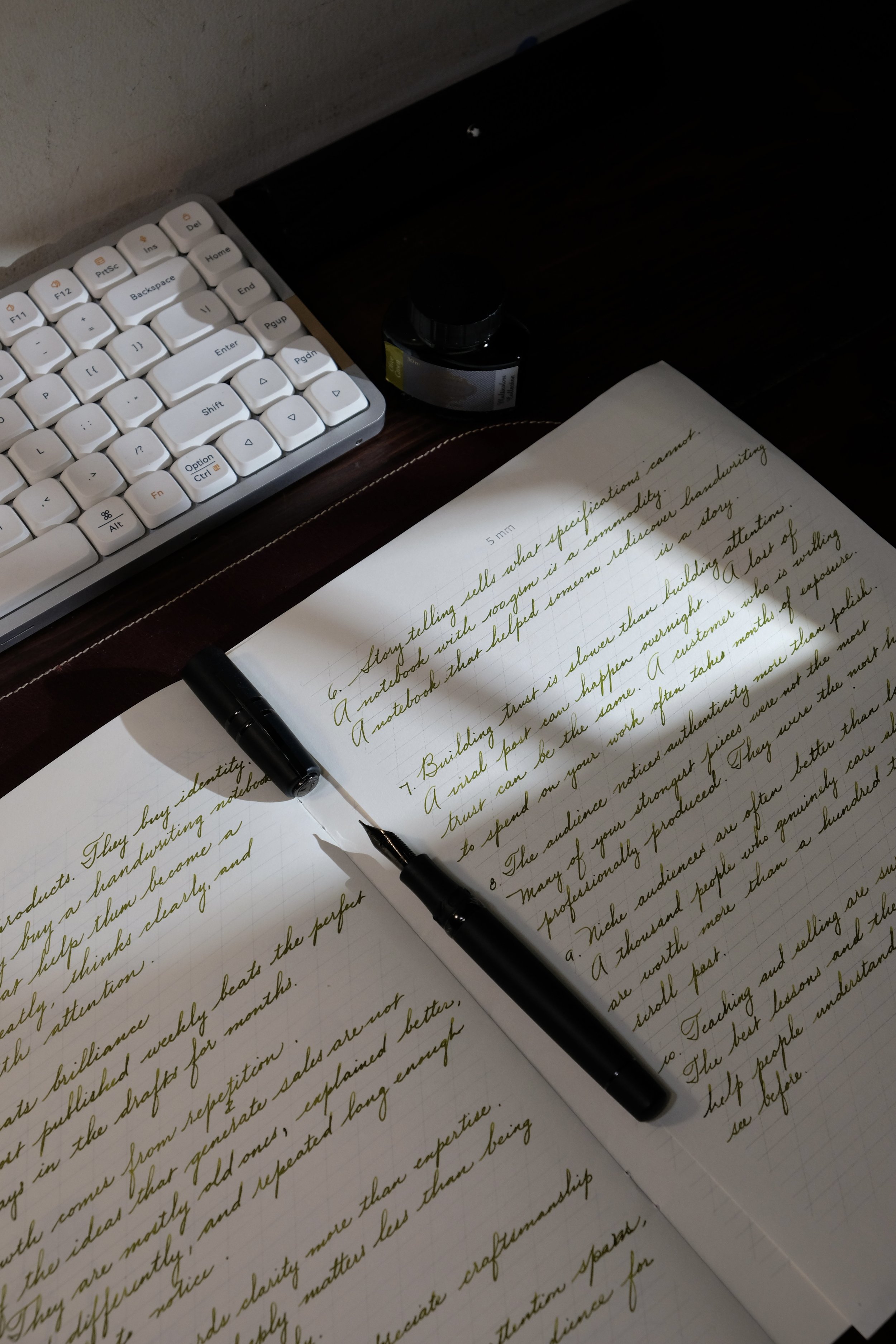
1. People rarely buy products. They buy identity.
Customers don’t really buy a handwriting notebook. They buy the possibility of becoming the kind of person who writes neatly, thinks clearly, and carries themselves with intention.
2. Consistency beats brilliance.
A mediocre post published every week outperformed the perfect post that stayed in drafts for months.
3. Most growth comes from repetition.
Many of the ideas that generated sales were not new ideas. They were old ideas explained better, packaged differently, and repeated long enough for people to notice.
4. The internet rewards clarity more than expertise.
Knowing something deeply matters less than being able to explain it simply.
5. The people who appreciate craftsmanship are still out there.
Despite all the noise about short attention spans, there remains a surprisingly large audience for quality, detail, and care.
6. Storytelling sells what specifications cannot.
A notebook with 100gsm paper is a commodity.
A notebook that helped someone rediscover handwriting is a story.
7. Building trust is slower than building attention.
A viral post can happen overnight.
A customer willing to spend money on your work often takes months of repeated exposure.
8. The audience notices authenticity more than polish.
Many of your strongest pieces were not the most professionally produced. They were the most honest.
9. Niche audiences are often better than large audiences.
A thousand people who genuinely care about handwriting are worth more than a hundred thousand who scroll past.
10. Teaching and selling are surprisingly similar.
The best lessons and the best sales pitches both help people understand something they couldn’t see before.
11. People want permission.
Often customers aren’t looking for information.
They’re looking for someone to tell them it’s okay to start, to write badly, to learn slowly, or to use the pen they’ve been saving.
12. Analog tools don’t solve digital problems.
A fountain pen cannot fix procrastination.
A notebook cannot create discipline.
But both can create conditions that make those things easier.
13. The things that feel insignificant often matter most.
Paper texture.
Packaging.
A handwritten note.
A carefully chosen word.
Small details accumulate into trust.
14. The work changes the creator.
What began as teaching handwriting gradually became an exercise in learning patience, observation, communication, and business.
15. The brand was never really about handwriting.
Handwriting was simply the doorway.
Behind the notebooks, fountain pens, essays, classes, and videos was a recurring theme: paying attention.
Paying attention to language.
Paying attention to craft.
Paying attention to the objects we use.
Paying attention to the lives we’re building.
The most surprising thing about building awritingguy is perhaps realizing that the audience wasn’t searching for better handwriting as much as they were searching for a slower, more deliberate way of moving through the world.